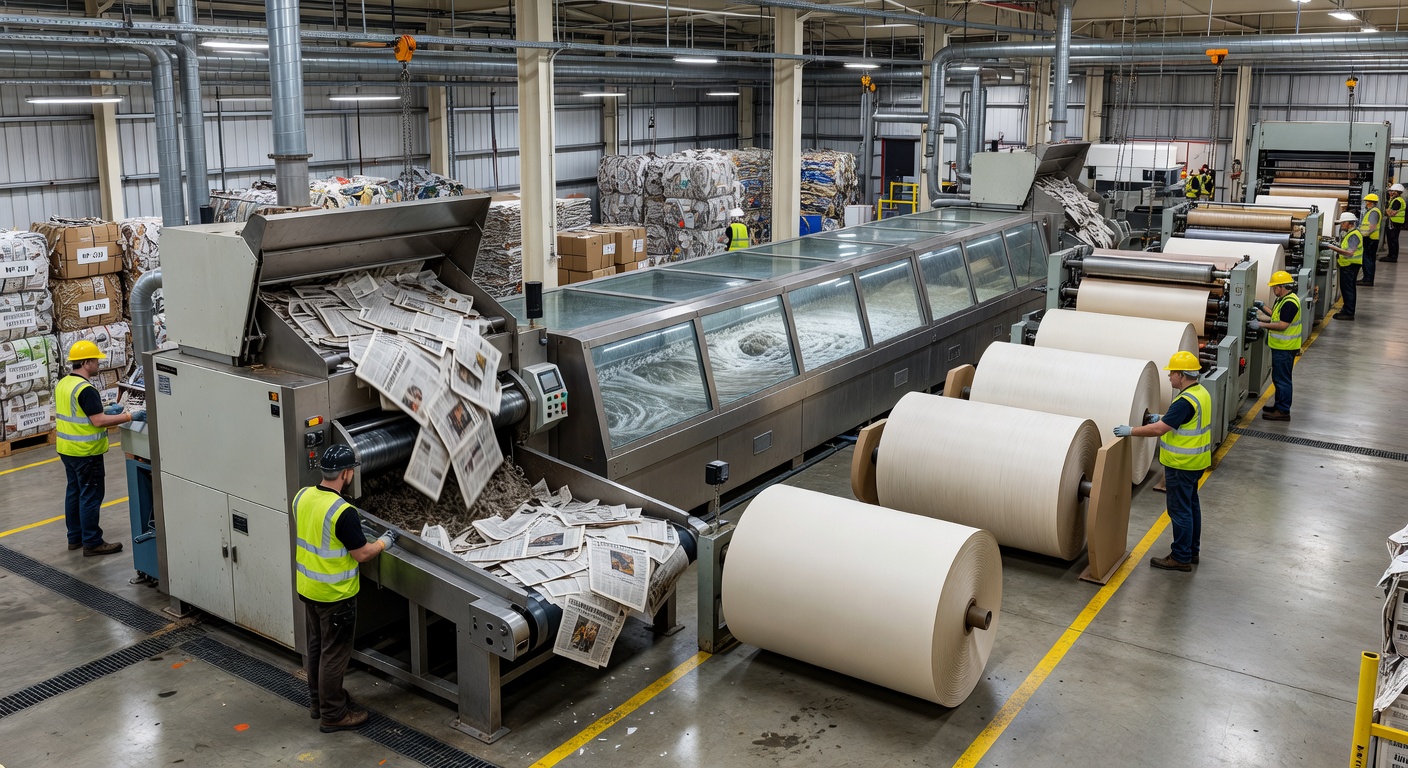
An overview of the processing systems, quality controls, and technical capabilities that underpin Resin Reclaim Tech's resin recovery operations.
Core Systems
Our facility is equipped with a sequential multi-stage processing line, each element selected for material compatibility, throughput consistency, and output quality.
Dual-rotor industrial shredders reduce incoming plastic scrap to uniform particle sizes for downstream processing. Knife geometry is selected based on material hardness and target output size.
Water float-sink tanks and air classification equipment separate mixed polymer streams by density, enabling identification and isolation of individual polymer types without manual sorting at scale.
Heated wash tanks with caustic solution remove surface contamination, adhesive residues, and processing aids from shredded material prior to extrusion. Multiple rinse stages ensure residue removal.
Two-stage drying using mechanical centrifugal dryers followed by heated air drying tunnels reduces surface and absorbed moisture to levels compatible with extrusion processing (<0.1% moisture content).
Co-rotating twin-screw extruders process dried polymer material through melt filtration and controlled re-extrusion, producing uniform pellets with consistent melt flow index and colour profile.
Optical sensors and automated sampling systems at each processing stage capture material data including colour, particle size distribution, and contaminant presence, feeding into the digital batch record.
Facility Design
The Sendai processing facility operates on a continuous-shift schedule with equipment layouts designed for sequential material flow, minimising handling steps between processing stages.
Facility zoning separates incoming unsorted material from clean processing areas, reducing cross-contamination risk and supporting material traceability through each stage.
Materials We Process
The table below summarises the resin types and material forms currently accepted within our standard processing programme. Pre-assessment is required for materials marked as conditional.
| Polymer Type | Common Abbreviation | Accepted Forms | Processing Route | Status |
|---|---|---|---|---|
| Polyethylene (High Density) | HDPE | Film, regrind, lumps, pipe | Shred → Wash → Extrude | Standard |
| Polyethylene (Low Density) | LDPE/LLDPE | Film, bags, regrind | Shred → Wash → Extrude | Standard |
| Polypropylene | PP | Mouldings, film, fibres, woven | Shred → Wash → Extrude | Standard |
| Polyethylene Terephthalate | PET | Bottles, sheet, fibre | Shred → Hot Wash → Dry → Extrude | Standard |
| Acrylonitrile Butadiene Styrene | ABS | Mouldings, sheet | Shred → Wash → Extrude | Standard |
| Polystyrene | PS/HIPS | Sheet, mouldings, film | Shred → Wash → Extrude | Standard |
| Nylon (Polyamide) | PA 6/66 | Film, mouldings, fibre | Dry → Shred → Extrude | Standard |
| Polycarbonate | PC | Sheet, mouldings | Dry → Shred → Extrude | Standard |
| Polyvinyl Chloride | PVC | Rigid profiles, sheet | Shred → Specialised processing | Conditional |
| Mixed / Unknown Polymers | Mixed | Various | Assessment required | Pre-Assessment |
Operational Performance
Operational metrics tracked across our processing facility, based on rolling 12-month average data from the Sendai primary facility.
All material processing events are logged digitally with timestamps and operator records for full traceability.
Material samples collected and logged at each processing stage without manual intervention using in-line sampling units.
Partner facilities access real-time batch status, material volumes, and compliance documentation through a dedicated online portal.
Process water is treated and recirculated within the washing system, reducing net water consumption per tonne of material processed.
Quality Assurance
The Resin Reclaim Tech testing laboratory performs material characterisation and certification analysis on all processed batches prior to release.
MFI measured using standardised extrusion plastometer equipment per ISO 1133. Values documented per batch and included in Certificate of Analysis.
DSC analysis confirms polymer identity, melting point, crystallinity, and thermal history of processed material batches. Used for engineering resin verification.
Mechanical property assessment per relevant ISO standards, including tensile strength, elongation at break, and notched Izod/Charpy impact resistance.
Visual and spectrophotometric assessment of pellet colour consistency and surface appearance, with output categorised into defined colour grade groups.
XRF and wet chemistry methods used to screen for restricted substances, heavy metals, and process chemical residues in processed batches where specified by client requirements.
Karl Fischer titration and gravimetric drying methods determine residual moisture levels in dried and extruded material, critical for hygroscopic engineering polymers.
Contact our technical team to discuss material compatibility, processing specifications, or equipment supply requirements.
Contact Technical Team